
Leaving an agency, keeping a craft

How you close an agency you loved, and what you choose to take with you.
It happens more often than we think.
A simple gesture acts as a turning point. For me, it was an email to send. The one that had been written for days and kept sitting in my drafts. Short, factual, almost administrative: fources agency is ending, but the work continues under another name. Behind it, the same face, the same person, the same commitments. Just a different sign on the door.
I read it one last time. I checked the list of recipients. I hesitated.
Not on the content. It was right. I hesitated on what that click would set in motion, for me, not for them. For my clients, it was an administrative formality. For me, it was the end of something that had held for seven years, that had known offices we’d loved and then left, projects that had worked and others less so.
I took a breath, and I clicked. The email was gone. I understood, in the second that followed, that what was tightening my throat wasn’t so much the end of fources agency. It was not yet knowing what to do next.
It took me six months to understand that what I was living through wasn’t an ending. It was a kind of learning. The learning of leaving without giving up. Of finishing without disowning. Of moving on without tearing down what came before.
Fources agency, digital seekers.
Fources agency was three people, equal shares on paper. A digital design agency in Brussels, in the same lineage as so many others: branding, websites, projects for cultural centres, small and medium businesses, sometimes partnerships with bigger agencies. Nothing new under the sun, and we knew it. But we did it well.
For seven years, we built what agencies of that size build: projects we’re proud of, others we’d have wanted different, a slow and solid reputation, a network of trusted partners. We went through a pandemic without giving up. We lived through the uncertainties that come with running a business, without backing down. We learned to say no to certain clients, and yes to others we wouldn’t have seen coming.
By the end of 2025, the three of us understood together that the project no longer held. It no longer held because we three no longer wanted the same thing, and continuing would have been more violent than stopping.
People underestimate the impact an ending can have, and the way it unfolds. And yet, for me it is plainly clear: ending together is harder than continuing, and far more honest. A structure that closes while saying clearly why it closes is worth more than a structure that survives by pretending.
So we wrote the final chapter together. We settled the accounts, informed the clients, closed properly what needed to be closed. Each of us went our own way, with our own projects, our own dreams, and the desire (or the need) to do things differently.
“Doing things differently”
For me, “doing things differently” didn’t mean doing something else. It meant continuing the same work, but on my own. With the same clients, or nearly so. With the same skills. But without the structure that had held them until then.
During the six months that followed, beyond its name, I didn’t create ideanest. Not right away. I first went through something I hadn’t anticipated, something that felt like a full-time invisible job.
I had to grieve. Not only the agency, but the version of myself who was the partner of two other people. That particular way of working together, with its debates, its disagreements, those moments when you’re three brains facing a problem. For years, I had taken it for granted. In a matter of weeks, I had to learn to carry decisions alone, to choose with no one to validate, to take responsibility with no one to share the risk. It’s a strange thing. We think grieving is about what we lose. It’s also about who we used to be.
Then, in that new solitude, I realised I was holding up. Better than I thought. Fifteen years of experience can’t be reduced to a CV. It is a sediment that settles without you noticing. I make decisions faster. I see problems earlier. I formulate things I would have hesitated to formulate five years ago. I didn’t know it yet, but I had gained a kind of confidence that was only waiting to unfold once the structure of my partnership had disappeared.
More confidence, more freedom ?
That confidence also translated into something more uncomfortable: the ability to say no. When you are three, saying no to a client is a collective decision, sometimes cowardly, often negotiated. When you are alone, saying no engages you fully. And so I discovered that saying no clarified many things. For the clients, who knew what to expect. And for me, who no longer wasted energy adjusting to projects that didn’t fit. I learned not only to choose projects by their interest, but also by the quality of the collaboration they promised. To turn down underestimated budgets for ambitious scopes. To turn down unclear chains of decision. To turn down clients who negotiate respect along with the fees.
During those six months, I had no revelation. I didn’t discover my mission. I didn’t pivot to a new line of work. I simply understood, slowly, that I already carried everything I needed to continue. What had been missing until then wasn’t more skills, but more clarity on the commitments I wanted to make, and with whom.
From fources agency to ideanest
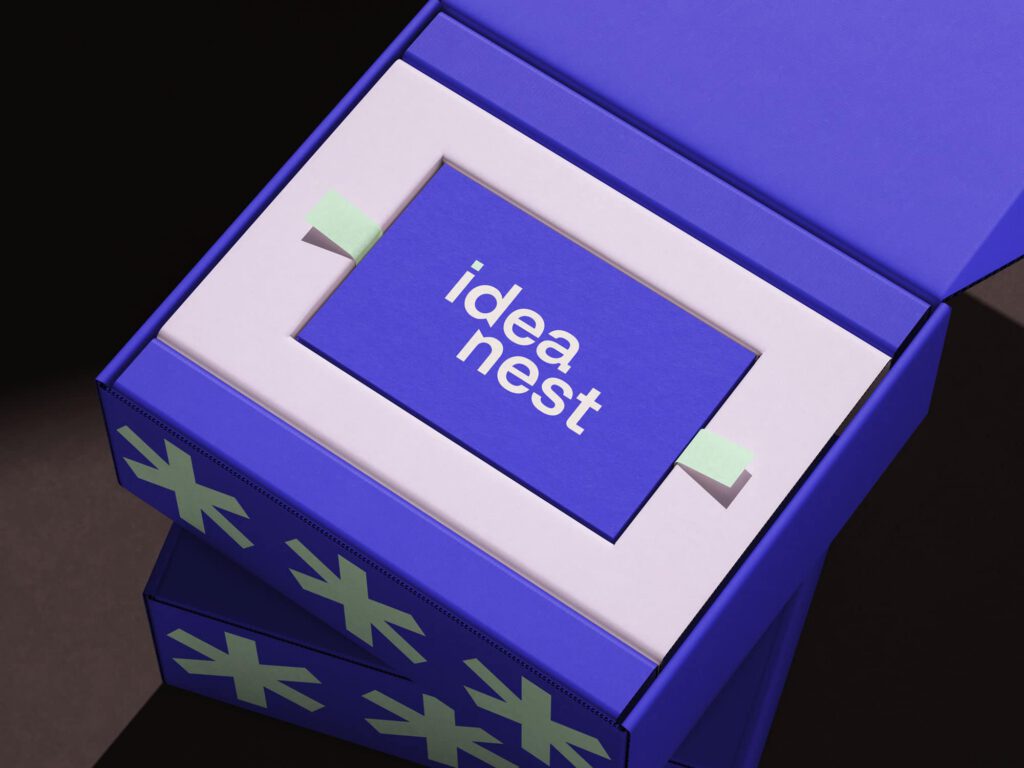
Ideanest is not a new project. It is what remains when you remove from a path what no longer worked, and you keep what deserves to continue.
I kept the skills, of course. You don’t leave fifteen years of practice behind. I kept the clients who wanted to continue, because they trusted me before and they still do today. I kept the colours and the visual world of Fources agency, because imposing a brutal aesthetic change on partners who hadn’t asked for anything would have been an unnecessary violence, for them as much as for me. The transition is gentle. Deliberately so.
What I changed is the frame. Or rather, what I changed are the commitments I am willing to make, and those I expect in return.
What can we expect from ideanest?
Ideanest is a solo practice, surrounded by partners chosen project by project, with no intermediate structure between me and the people who entrust me with their work. I advise, I design, I support. For projects that have meaning and respect their users. For organisations that know what they want to build, and accept that we discuss it clearly.
The name ideanest, I chose it for what it suggests without saying too loudly: a place where ideas can settle, take shape, and continue on their way. Not an incubator, nor a factory. Rather a space where what deserves to exist finds the skills and commitments it needs to stand up. What ideanest aims to do is to design digital projects with their users in mind. It is short, it is insufficient, but it is right. It took me seven years, a closure, and six months of reflection to be able to write it so simply.
The words I write here are mine, but if you are leaving something behind, a structure, a way of working, a partnership that no longer holds, a certainty, I mostly wanted to say this: it is possible to do it without tearing everything down.
You can sort without losing anything. You can let some things end without disowning what they were. You can take the time to think, for weeks or for months, without that silence being a waste.
During those six months, people often asked me “so, where are you now?”. I had no clear answer to give, and I eventually accepted not having one. It might be the most useful thing I learned: that there are moments in a working life when invisible work, the work of reflection, of grieving, of reconfiguration, is worth as much as the work you can put on an invoice.
Ideanest exists now because those six months existed. Everything I understood there, I now put at the service of the projects that come through my door. So let’s leave the doors wide open, shall we?